 Fast Delivery
  Expert Support
 Low Trade Prices
 Quality Products
Preparing a subfloor properly is one of the most important parts of any flooring installation. If the base is damaged, dusty, porous or affected by moisture, the finished floor is far more likely to fail later. This guide explains how to repair, prime and damp-proof a subfloor using ARDEX products, so the surface is ready for the next stage of installation.
Why Subfloor Preparation Matters
A floorcovering is only as good as the surface beneath it. If the substrate is uneven, weak or contaminated, the final floor can fail prematurely, even if the visible finish looks sound at first. Problems such as poor adhesion, surface movement, blistering or visible imperfections are often traced back to inadequate preparation.
Good preparation reduces the risk of callbacks and helps ensure the floor performs as intended. It also makes the next stages of the installation easier, because each layer is being applied to a more reliable base. In most projects, the best results come from diagnosing the condition of the subfloor first and then applying the right treatment in the right order.
How Do You Assess a Subfloor Before Starting Work?
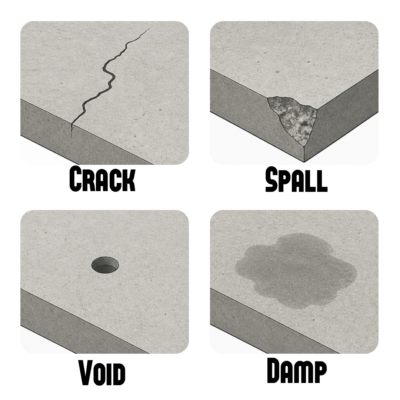
Before any repair or levelling work begins, the substrate should be inspected carefully. Look for cracks, spalled areas, holes, contamination, dust, porosity and moisture. These are not all the same problem, and they should not be treated as though they are.
Some floors need structural repair to damaged concrete. Others need priming to stabilise a porous surface. In many cases, moisture must also be dealt with before the final finish can go down. Where contamination, laitance or curing compounds are present, mechanical preparation such as shot blasting or grinding, followed by thorough vacuum extraction, is the most reliable way to achieve a clean, sound surface. A proper inspection helps determine which products are needed and prevents unnecessary work later in the process.
How Should Damaged Concrete Be Repaired?
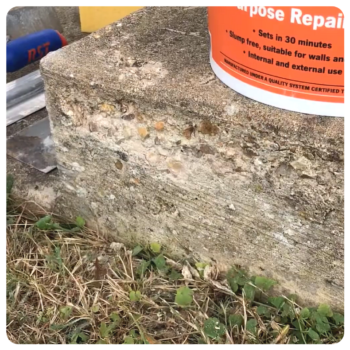
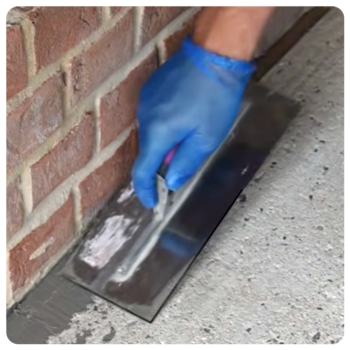
Cracks, holes and localised damage should be repaired before any further layers are added. If these defects are left untreated, they can telegraph through the finished floor, affect flatness or weaken the surrounding area. Repairing the substrate first creates a more dependable foundation for the rest of the system.
For this stage, ARDEX A 46 is a practical choice for rapid repair work on damaged concrete (see our article for more information on this product). It is designed to restore local defects quickly, which helps keep the project moving while still producing a durable repair. It can be used in internal and external applications, making it suitable for a range of flooring preparation jobs.
To approach the repair stage correctly, first remove all loose or unsound material from the damaged area. The surface should be clean, sound and ready to receive the repair mortar. ARDEX A 46 can then be applied to fill the defect and rebuild the area to the correct level.
For deeper localised damage, the repair may need to be built up in layers. Each application should be allowed to cure properly before the next stage begins. The aim is to create a stable, durable surface that supports the rest of the flooring system rather than compromising it.
When Should You Use a Primer on a Subfloor?
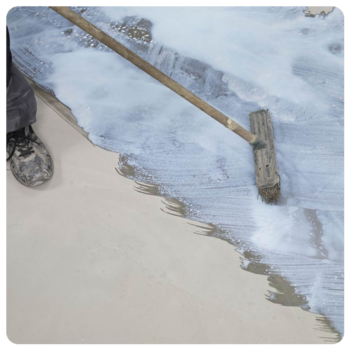
Even a sound subfloor may still be too porous or inconsistent to receive the next layer directly. In those situations, priming helps improve adhesion and creates a more controlled surface for levelling or other floor treatments. It is an important step where the substrate needs stabilising before further work.
ARDEX P 51 is a concentrated, water-based primer and bonding agent designed to prepare absorbent substrates and improve the bond between the subfloor and the next product in the system. That makes it a useful part of many flooring preparation jobs, especially where the substrate needs a more predictable finish. For non-absorbent or difficult substrates, always check the technical data sheet, as an alternative ARDEX primer may be required.
The use of a primer also depends on the levelling and smoothing compound you plan to use afterwards. For example, ARDEX K 55 FAST, ARDEX K 40 and ARDEX K 301 are recommended to be applied after the substrate has been primed with ARDEX P 51. On the other hand, ARDITEX NA Levelling and Smoothing Compound offers excellent adhesion to almost all substrates without priming. When deciding which levelling and smoothing compound to use, always refer to each product’s technical data sheet to make sure it suits your project. These are available on both BaseTec’s product pages and the official ARDEX website.
When Do You Need a Damp Proof Membrane?
Moisture Control
Many problems which occur with floorcoverings are as a result of moisture in the subfloor, so it is essential that the final floorcovering is protected from the passage of moisture from below. Surface damp proof membranes form a film which restricts the passage of moisture, and allow the controlled passage of moisture vapour; protecting the adhesive and final floorcovering.
Prior to the installation of floorcoverings, it is important to identify the type and level of moisture present in the subfloor, which usually results from either rising damp, due to the absence or breakdown of the structural damp proof membrane, or from residual construction moisture. The resilient flooring should not be laid until a hygrometer test gives a reading of not more than 75% relative humidity (BS 8203).
Advice in the Contract Flooring Association’s ‘Guide to Contract Flooring’ states that types of surface damp proof membranes are available to deal with both situations, but some are only suitable for residual construction moisture, so it is important to correctly specify the right product for the right installation.
The Control of Residual Construction Moisture
Research has shown that under ideal conditions a screed up to 50mm thick will take approximately one day per mm to dry. Time scales in many projects do not allow for lengthy drying times, so sufficient time is not left for the construction moisture in the subfloor to dry out. A moisture vapour suppressant is designed to control the passage of moisture used within the construction process i.e. residual construction moisture, and guarantees the early application of the subsequent levelling and smoothing compound, and final floorcovering.
The Control of Rising Damp
A surface damp proof membrane will protect against residual construction moisture, and continual rising vapour from the earth, and is required where a structural damp proof membrane is not present or is ineffective. This is likely to be the case in refurbishment projects involving buildings constructed before 1970, where the installation of an effective structural damp proof membrane was not a requirement of the building regulations.
How to Prepare a Subfloor for ARDEX DPM 1 C Damp Proof Membrane
A sound subfloor may still be too inconsistent or porous to receive the moisture control layer directly. Subsequently, pre-smoothing helps create a more controlled surface to receive moisture control treatments. Typically, an uneven concrete or cement and sand screed surface would initially be smoothed with ARDITEX NA, then treated with ARDEX DPM1C followed by ARDITEX NA. The initial layer of ARDITEX NA provides a smooth surface to receive the ARDEX DPM1C.
Do You Need to Level or Smooth the Surface?
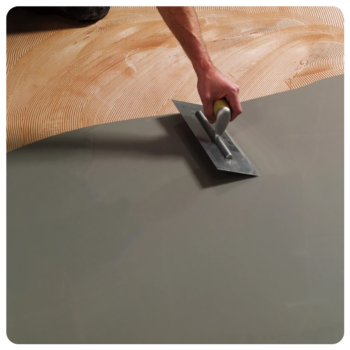
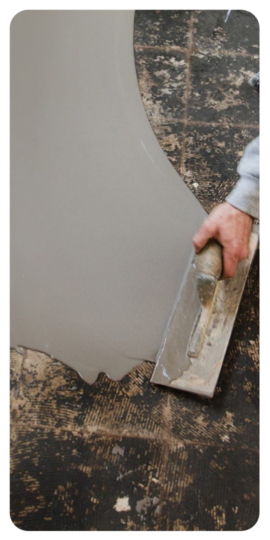
Once the repair and moisture-control stages have been addressed, the floor may still need smoothing, which also provides an absorbent surface to receive the flooring adhesive. A substrate can be sound and dry enough to work on but still uneven, rough or inconsistent. That can make floorcovering installation more difficult and can affect the quality of the finished result.
ARDITEX NA is used as the levelling and smoothing compound in this system. It is designed to create a smooth, even surface ready for floorcoverings, making it a strong final preparation step where a high-quality finish is needed. When used correctly, it helps produce a clean, dependable base for the decorative layer above.
Levelling should usually come after repair and moisture treatment because it depends on the substrate being stable first. Once the damaged areas have been restored and moisture has been controlled, the levelling compound can do its job properly. That sequence helps ensure the finished floor performs as intended and looks professional once installed.
Key Takeaways
The safest approach to subfloor preparation is to inspect the substrate carefully, identify any underlying issues, choose the right products for each stage, and follow a clear sequence in which every step supports the next. Get the preparation right and everything above it becomes more reliable — from adhesion to appearance to long-term performance.
You can explore the full ARDEX range at BaseTec, and if you need help choosing the right product for your project, our team is on hand to advise. For detailed application guidance, always refer to the relevant technical data sheet or contact ARDEX Technical Services.

 5 min read
 May 6 2026