
 Fast Delivery
  Expert Support
 Low Trade Prices
 Quality Products
 In Stock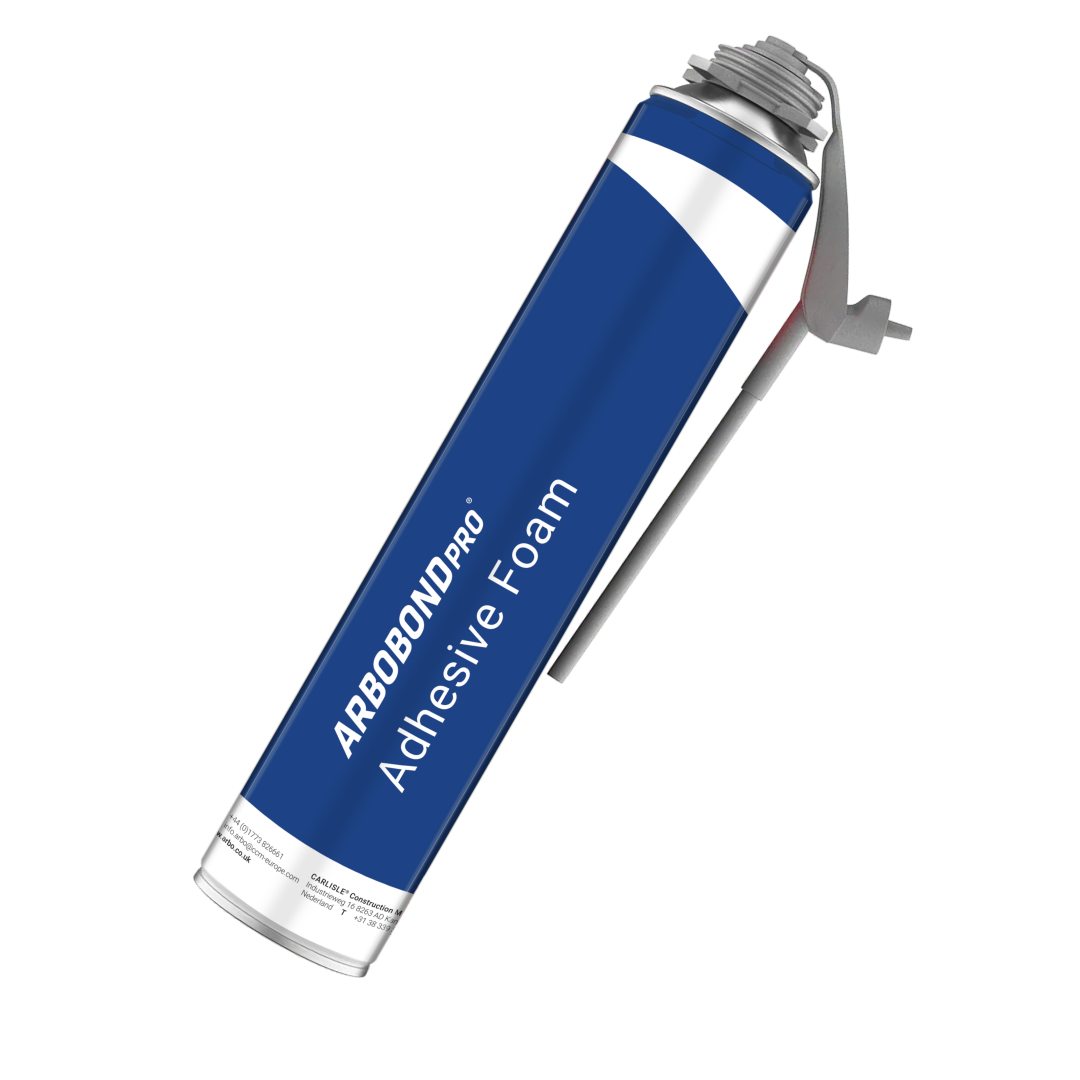
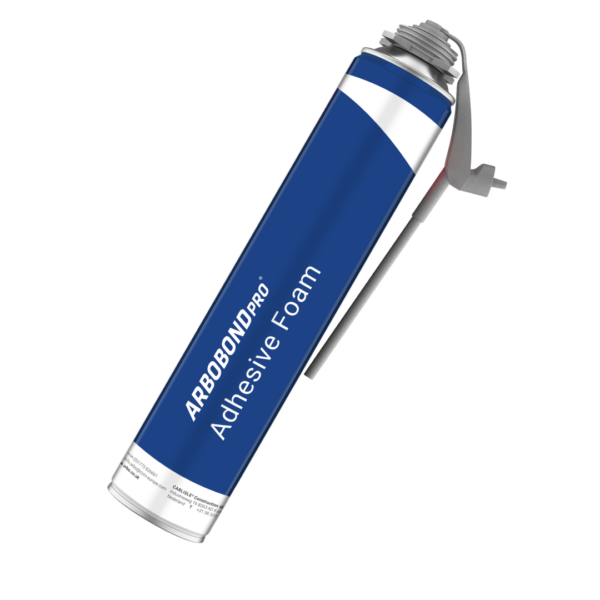
ARBOBOND Pro B2 Adhesive Foam
Main Applications
ARBOBOND Pro B2 Adhesive Foam is suitable for fixing insulation boards on facades and foundations, adhering and installing SIP boards, fixing interior design boards, fixing windowsills, gluing construction blocks, and reducing the impact of thermal bridges.
It bonds many construction materials including polystyrene, plasterboard, OSB, chipboard, timber, concrete, stone, metal and PVC.
Key Performance Attributes
ARBOBOND Pro B2 Adhesive Foam offers excellent adhesion to many surfaces.
It is suitable for all-season use, from -5°C up to +30°C, and provides low curing pressure and post-expansion.
The product is also suitable for filling and insulating narrow joints.
Application conditions
Air temperature during use should be between -5°C and +30°C, with best results at +20°C.
Can temperature during application should be between +5°C and +25°C, with best results at +20°C.
The foam can must be warmed with water or air, up to a maximum of +30°C, before starting work in low temperatures.
Surface preparation
Surfaces must be clean and free from dust, loose particles and grease.
Moisten dry substrate to ensure better results.
Application with foam gun
Shake the can vigorously at least 20 times.
Hold the foam can in an upright position, turn the gun to the can by holding the gun handle with one hand, and turn the can with the other hand.
Make sure that the gun is not pointed at other persons when turning it.
The can must not be screwed to the gun with the valve upside down or by turning the gun on the can.
The foam output can be adjusted by the gun trigger.
For gluing insulation boards and interior design boards:
Apply the foam adhesive to boards as an even flow, parallel with the sides of the board, 3–4 cm from the edge, and apply one strip in the middle, parallel to the longest side, leaving up to 25 cm between adhesive strips.
After applying the foam adhesive to the board, wait 2–3 minutes and then press the board to the wall.
The level of installed boards can be adjusted within up to 5 minutes.
Output for 750 ml when fixing insulation boards is 10 m2 of wall surface.
ARBOBOND Pro B2 Adhesive Foam has sufficient strength for fixing insulation boards.
Always follow building design, building regulations, standards or other relevant guidelines concerning additional mechanical fastening when covering insulation boards with cladding materials.
Use of insulation support anchors is always recommended.
In general, it is not recommended to use this product on bituminous surfaces.
In some cases, for example fixing insulation boards on bitumen-treated foundations before backfilling, the product has sufficient adhesion.
Always test before use.
Fixing of windowsills:
Before fixing the windowsill, make sure that the base surface is levelled.
Spacers must be used to support the windowsill; foam can only be used as an adhesive.
Apply ARBOBOND Pro B2 Adhesive Foam to the base surface 3–4 cm from the edge.
Weights must be used to fix the windowsill until the foam adhesive is cured.
Gluing of construction blocks:
ARBOBOND Pro B2 Adhesive Foam can be used for nonbearing interior walls.
Consult ARBO Technical Services regarding compatibility with various stone-based materials and other technical issues.
The first row of blocks must be levelled using mortar.
The substrate should be moistened as the foam cures due to moisture, and a moistened surface ensures better results.
ARBOBOND Pro B2 Adhesive Foam should be applied to both vertical and horizontal surfaces.
Wait for a few minutes after applying the foam adhesive and then press the stone surfaces together.
Ensure block-to-block loads are evenly distributed.
The product is not suitable for distributing or carrying loads.
Cleaning
Uncured foam can be removed with acetone.
Cured foam can be removed mechanically.
Reviews
There are no reviews yet.